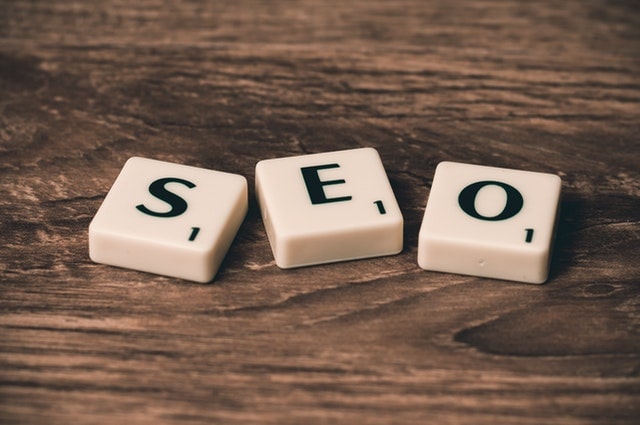
Succeeding in organic search today requires optimizing for a combination of factors that search engines consider important – technical, on-page SEO and off-page.
Over the years, we’ve seen increased focus toward off-page techniques – such as link building – and other technical elements.
CHAPTER 1: SEO 101
What is it, and why is it important?
For true beginners. Learn what search engine optimization is, why it matters, and all the need-to-know basics to start yourself off right.
CHAPTER 2: HOW SEARCH ENGINES WORK – CRAWLING, INDEXING, AND RANKING
First, you need to show up.
If search engines literally can’t find you, none of the rest of your work matters. This chapter shows you how their robots crawl the Internet to find your site and add it to their indexes.
CHAPTER 3: KEYWORD RESEARCH
Understand what your audience wants to find.
Our approach targets users first because that’s what search engines reward. This chapter covers keyword research and other methods to determine what your audience is seeking.
CHAPTER 4: ON-SITE OPTIMIZATION
Use your research to craft your message.
This is a hefty chapter, covering optimized design, user experience, information architecture, and all the ways you can adjust how you publish content to maximize its visibility and resonance with your audience.
CHAPTER 5: TECHNICAL SEO
Basic technical knowledge will help you optimize your site for search engines and establish credibility with developers.
By implementing responsive design, robot directives, and other technical elements like structured data and meta tags, you can tell Google (a robot itself) what your site is all about. This helps it rank for the right things.
CHAPTER 6: LINK BUILDING & ESTABLISHING AUTHORITY
Turn up the volume.
Once you’ve got everything in place, it’s time to expand your influence by earning attention and links from other sites and influencers.
CHAPTER 7: MEASURING, PRIORITIZING, & EXECUTING SEO
Set yourself up for success.
An essential part of any SEO strategy is knowing what’s working (and what isn’t), adjusting your approach as you go along.
THE SEO GLOSSARY
Understand key terms and phrases.
Learning SEO can sometimes feel like learning another language, with all the jargon and industry terms you’re expected to know. This chapter-by-chapter glossary will help you get a handle on all the new words.
But the reality is, off-page SEO won’t do much good if you don’t pay attention to the fundamentals – on-page SEO.
Smart SEO practitioners know that on-page optimization should be constantly prioritized.
And because the search landscape is ever-evolving, it’s important to make sure your on page knowledge is up to date.
In this post, we will cover what On-page SEO is, why it matters, and 10 of the most important on-page SEO considerations today.
What Is On-Page SEO?
On-page SEO (also known as on-site SEO) refers to the practice of optimizing web pages to improve a website’s search engine rankings and earn organic traffic.
In addition to publishing relevant, high-quality content, on-page SEO includes optimizing your headlines, HTML tags (title, meta, and header), and images. It also means making sure your website has a high level of expertise, authoritativeness, and trustworthiness.ADVERTISEMENTCONTINUE READING BELOW
It takes into account various aspects of the webpage that, when added together, will improve your website’s visibility in the search results.
Why On-Page SEO Is Important
On-page SEO is important because it helps search engines understand your website and its content, as well as identify whether it is relevant to a searcher’s query.
As search engines become more sophisticated, there is a greater focus toward relevance and semantics in search engine results pages (SERPs).
Google, with its plethora of complex algorithms, is now much better at:
- Understanding what users are actually searching for when they type a query.
- Delivering search results that meet user intent (informational, shopping, navigational).
Adapting to this development is essential, and you can do it by ensuring that your website and its content – both what is visible to users on your webpages (i.e., text, images, video, or audio) and elements that are only visible to search engines (i.e., HTML tags, structured data) – are well-optimized according to the latest best practices.ADVERTISEMENTCONTINUE READING BELOW
Additionally, you can’t simply ignore on-page SEO because you have more control when optimizing for on-site elements – as opposed to off-page SEO that consists of external signals (i.e., backlinks).
If you put effort into on-page strategies, you’ll see a boost in traffic and a rise in your search presence.
This guide will walk you through the most important elements of on-page SEO.
Paying close attention to these 10 areas of On-page SEOwill help improve your content and authority – and increase your rankings, traffic, and conversions.
1. E-A-T
E-A-T, which stands for Expertise, Authoritativeness, and Trustworthiness, is the framework that Google raters use to assess content creators, webpages, and websites as a whole.
Google has always put a premium on high-quality content. It wants to make sure that sites producing high-quality content are rewarded with better rankings and sites that create low-quality content get less visibility.
There is a clear relationship between what Google considers high-quality content and what appears in the search results.
Every business needs a helping hand…or 10.
Hand your unique tasks over to expert freelancers with every kind of skill who can put the finishing touch you need on any kind of project.
Call it correlation or causation – whatever it is, E-A-T is somehow playing a role in Google’s organic search results. Which means E-A-T must be a consideration in your On-page SEO strategy.
2. Title Tag
The title tag, an HTML tag that exists in the head section of each webpage, provides an initial cue or context as to what the topical subject matter is of the respective page it is on.
It is featured prominently in the search engine results pages (typically used as the clickable link) as well as in the browser window.
The title tag by itself has little impact on organic rankings, this why it’s sometimes overlooked.
That said, missing, duplicate, and poorly written title tags can all negatively impact your SEO results, so make sure you’re optimizing for this element.
3. Meta Description
Since the early days of SEO, meta descriptions have been an important optimization point.
Meta descriptions, meta tags that provide a description of what the page is about, are often displayed in the SERPs underneath the title of the page.ADVERTISEMENTCONTINUE READING BELOW
While Google maintains that meta descriptions don’t help with On-page SEO rankings, there is anecdotal evidence that indirect attributes of better descriptions do help.
Optimizing meta description correctly can help improve:
- Click-through rate (CTR).
- Perception of the quality of the result.
- Perception of what your website offers all change.
4. Headlines
Want your website content to perform well on search? Then start writing compelling headlines.
Coming up with a title for a blog post might seem too basic, but a great headline can mean the difference between a click and an impression – that’s why it’s important to create them strategically.
Your headlines need to spark interest for it to stand out on the SERPs – enticing users to click through and continue reading the rest of the content.
5. Header Tags
Header tags are HTML elements (H1-H6) used to identify headings and subheadings within your content from other types of text (e.g., paragraph text).
Header tags aren’t as critically important for your site rankings as they used to be, but these tags still serve an important function – for your users and your SEO.
They can indirectly impact your rankings by:
- Making your content easier and more enjoyable for visitors to read.
- Providing keyword-rich context about your content for the search engines.
6. SEO Writing
SEO writing means writing content with both search engines and users in mind.
There is a strategy behind writing solid On-page SEO content – and it is more than just keyword research and fill in the blanks.
Simply producing content for the sake of it won’t do. Remember that you’re writing content for people – therefore that content must be high-quality, substantial, and relevant.
7. Keyword Cannibalization
True or false? The more pages you have targeting a keyword, the better you’ll rank for that keyword.
False!
Targeting a specific term across multiple pages can cause “keyword cannibalization” which has some potentially disastrous consequences for your On-page SEO.
When you have multiple pages ranking for the same keyword, you’re actually competing with yourself.
It’s important to identify whether keyword cannibalization exists on your website and resolve it right away.
Refer this blog to know more about the Best Keyword Research Tools
8. Content Audit
Most content creators are focused on creating new content that they forget to audit their existing content. And this is a mistake.
Auditing your existing content is crucial because it helps you:
- Evaluate whether your existing content is achieving its goals and gaining ROI.
- Identify whether the information in your content is still accurate or has become stale (or even outdated).
- Determine what types of content are working for you.
Content audits can greatly help your SEO strategy and they should be done on a regular basis.
9. Image Optimization
Adding images is a good way to make your webpages more appealing. But not all images are created equal – some can even slow down your website.On-page
Optimizing images properly will help you make the most of a valuable SEO asset.
Image optimization has many advantages, such as:ADVERTISEMENTCONTINUE READING BELOW
- Additional ranking opportunities (show up on Google Image Search).
- Better user experience.
- Faster page load times.
Images shouldn’t be an afterthought. Make sure to incorporate images that support your content and use descriptive titles and alt text.
10. User Engagement
Enhancing your website’s on-page SEO elements is only half the battle.
The other half lies in making sure that users will not bounce – On-page but instead, they’ll continue viewing your content, interacting with it, and keep coming back for more.
Retaining engaged users is a great challenge in itself, but it’s certainly doable. To increase user engagement, focus on aspects such as site speed, user experience, and content optimization, among others.On-page
Get Our Complete Guide to On-Page SEO
We’ve only just scratched the surface. Ready to go much deeper?
Search Engine Journal’s ebook, The Complete Guide to On-Page SEO, tackles the top on-page SEO factors that impact your pages’ visibility on the SERPs.On-page
Welcome to your SEO learning journey!
You’ll get the most out of this guide if your desire to learn search engine optimization (SEO) is exceeded only by your willingness to execute and test concepts.
This guide is designed to describe all major aspects of SEO, from finding the terms and phrases (keywords) that can generate qualified traffic to your website, to making your site friendly to search engines, to building links and marketing the unique value of your site.
The world of search engine optimization is complex and ever-changing, but you can easily understand the basics, and even a small amount of SEO knowledge can make a big difference. Free SEO education is also widely available on the web, including in guides like this! (Woohoo!)
Combine this information with some practice and you are well on your way to becoming a savvy SEO.
The Basics of Search Engine Optimization
Ever heard of Maslow’s hierarchy of needs? It’s a theory of psychology that prioritizes the most fundamental human needs (like air, water, and physical safety) over more advanced needs (like esteem and social belonging). The theory is that you can’t achieve the needs at the top without ensuring the more fundamental needs are met first. Love doesn’t matter if you don’t have food.
Our founder, Rand Fishkin, made a similar pyramid to explain the way folks should go about SEO, and we’ve affectionately dubbed it “Mozlow’s hierarchy of SEO needs.”
Here’s what it looks like:

As you can see, the foundation of good SEO begins with ensuring crawl accessibility, and moves up from there.
Using this beginner’s guide, we can follow these seven steps to successful SEO:
- Crawl accessibility so engines can read your website
- Compelling content that answers the searcher’s query
- Keyword optimized to attract searchers & engines
- Great user experience including a fast load speed and compelling UX
- Share-worthy content that earns links, citations, and amplification
- Title, URL, & description to draw high CTR in the rankings
- Snippet/schema markup to stand out in SERPs
We’ll spend time on each of these areas throughout this guide, but we wanted to introduce it here because it offers a look at how we structured the guide as a whole.
Welcome to your SEO learning journey!
You’ll get the most out of this guide if your desire to learn search engine optimization (SEO) is exceeded only by your willingness to execute and test concepts.
This guide is designed to describe all major aspects of SEO, from finding the terms and phrases (keywords) that can generate qualified traffic to your website, to making your site friendly to search engines, to building links and marketing the unique value of your site.Why On-Page SEO Is ImportantWhy On-Page SEO Is Important
The world of search engine optimization is complex and ever-changing, but you can easily understand the basics, and even a small amount of SEO knowledge can make a big difference. Free SEO education is also widely available on the web, including in guides like this! (Woohoo!)
Combine this information with some practice and you are well on your way to becoming a savvy SEO.
The Basics of Search Engine Optimization
Ever heard of Maslow’s hierarchy of needs? It’s a theory of psychology that prioritizes the most fundamental human needs (like air, water, and physical safety) over more advanced needs (like esteem and social belonging). The theory is that you can’t achieve the needs at the top without ensuring the more fundamental needs are met first. Love doesn’t matter if you don’t have food.
Our founder, Rand Fishkin, made a similar pyramid to explain the way folks should go about SEO, and we’ve affectionately dubbed it “Mozlow’s hierarchy of SEO needs.”
Using this beginner’s guide, we can follow these seven steps to successful SEO:
- Crawl accessibility so engines can read your website
- Compelling content that answers the searcher’s query
- Keyword optimized to attract searchers & engines
- Great user experience including a fast load speed and compelling UX
- Share-worthy content that earns links, citations, and amplification
- Title, URL, & description to draw high CTR in the rankings
- Snippet/schema markup to stand out in SERPs
We’ll spend time on each of these areas throughout this guide, but we wanted to introduce it here because it offers a
look at how we structured the guide as a whole.
Using this beginner’s guide, we can follow these seven steps to successful SEO:
- Crawl accessibility so engines can read your website
- Compelling content that answers the searcher’s query
- Keyword optimized to attract searchers & engines
- Great user experience including a fast load speed and compelling UX
- Share-worthy content that earns links, citations, and amplification
- Title, URL, & description to draw high CTR in the rankings
- Snippet/schema markup to stand out in SERPs
We’ll spend time on each of these areas throughout this guide, but we wanted to introduce it here because it offers a look at how we structured the guide as a whole.
Welcome to your SEO learning journey!
You’ll get the most out of this guide if your desire to learn search engine optimization (SEO) is exceeded only by your willingness to execute and test concepts.
This guide is designed to describe all major aspects of SEO, from finding the terms and phrases (keywords) that can generate qualified traffic to your website, to making your site friendly to search engines, to building links and marketing the unique value of your site.
The world of search engine optimization is complex and ever-changing, but you can easily understand the basics, and even a small amount of SEO knowledge can make a big difference. Free SEO education is also widely available on the web, including in guides like this! (Woohoo!)
Combine this information with some practice and you are well on your way to becoming a savvy SEO.
The Basics of Search Engine Optimization
Ever heard of Maslow’s hierarchy of needs? It’s a theory of psychology that prioritizes the most fundamental human needs (like air, water, and physical safety) over more advanced needs (like esteem and social belonging). The theory is that you can’t achieve the needs at the top without ensuring the more fundamental needs are met first. Love doesn’t matter if you don’t have food.
Our founder, Rand Fishkin, made a similar pyramid to explain the way folks should go about SEO, and we’ve affectionately dubbed it “Mozlow’s hierarchy of SEO needs.”
Using this beginner’s guide, we can follow these seven steps to successful SEO:
- Crawl accessibility so engines can read your website
- Compelling content that answers the searcher’s query
- Keyword optimized to attract searchers & engines
- Great user experience including a fast load speed and compelling UX
- Share-worthy content that earns links, citations, and amplification
- Title, URL, & description to draw high CTR in the rankings
- Snippet/schema markup to stand out in SERPs
We’ll spend time on each of these areas throughout this guide, but we wanted to introduce it here because it offers a look at how we structured the guide as a whole.




Hi, this is a comment.
To get started with moderating, editing, and deleting comments, please visit the Comments screen in the dashboard.
Commenter avatars come from Gravatar.